One of the simplest pasta dishes is also one of the tastiest. Spaghetti aglio e olio literally translates to “spaghetti with garlic and oil” but this dish is so much more than the sum of its parts. With just a few minutes of active cooking time, you can have a meal on the table in about 15 minutes.
My twist on the classic Italian dish is to use coriander leaves instead of the more traditional parsley, but even without that change, this recipe is ridiculously easy to make. Simply slice up some garlic and red pepper flakes and sauté them in some olive oil until the garlic is golden. Then toss in cooked spaghetti and top with some chopped coriander (or parsley if you prefer) and a sprinkle of Parmesan cheese. I know the Parmesan isn’t traditional, but I like it, and if you’re making it, you should make it the way you like it.
Coriander works really well in this dish and is a great substitute for parsley. It brings a slightly different fresh note to the dish, one that is a bit earthier and a bit more citrusy than parsley.
What is Aglio e Olio?
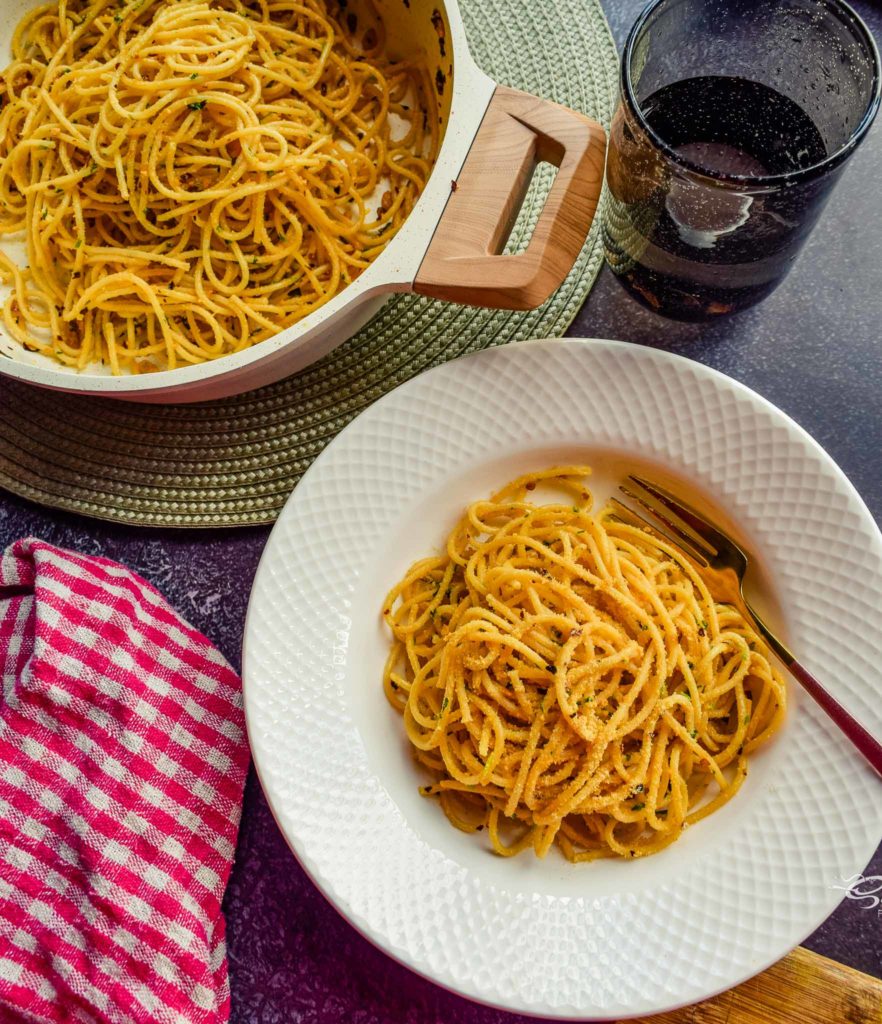
Aglio e olio is a simple pasta dish from Naples that consists of essentially two things: spaghetti and a sauce made of olive oil and garlic. The dish does sometimes include the addition of red pepper flakes (to give it a little kick) and some fresh herbs (to add color and a bit of freshness at the end), but aside from that, aglio e olio is, by definition, rather simple. It is one of those Italian dishes that reminds you that nothing good has to be difficult.
To make it, you boil some spaghetti, heat some olive oil in a large pan over low heat with some slices of garlic (which you cook slowly and watch carefully for color) and then, when everything is ready, you combine the two, adding a bit of pasta water here and there to enable the oil to coat each strand of spaghetti smoothly and evenly. The oil and garlic form a rich yet light sauce. Red pepper flakes add heat. Herbs add freshness. The cooked pasta adds starch that combines with the oil to make everything smooth and silky.
Ingredients
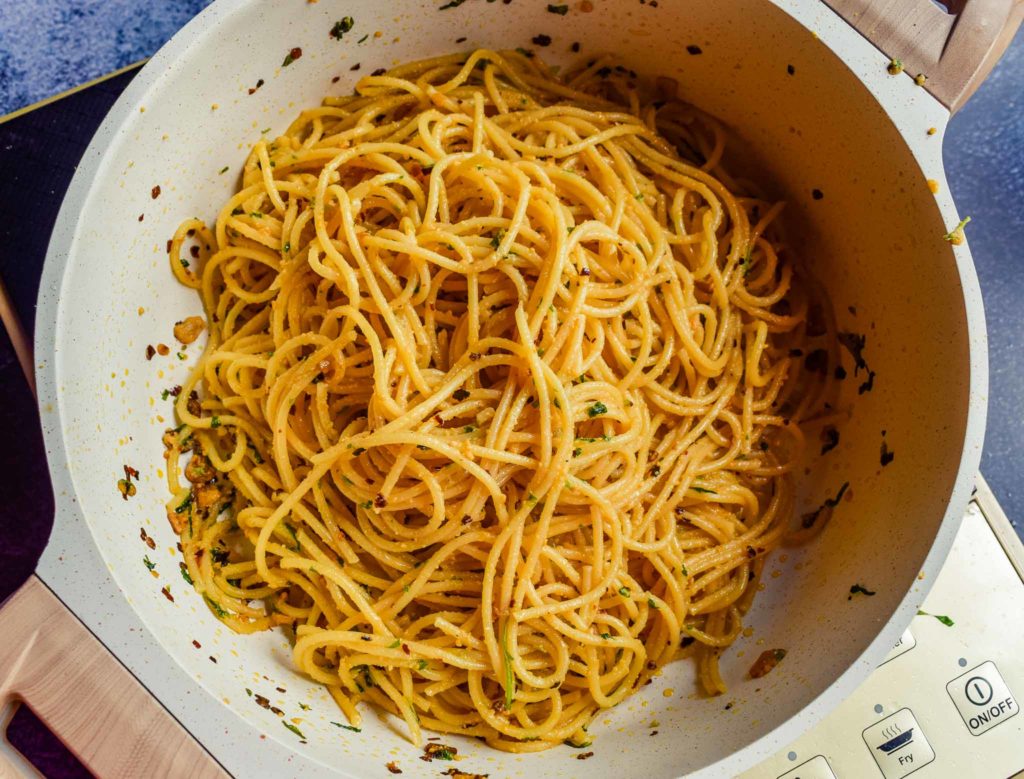
Of course, my version of Spaghetti Aglio e Olio recipe has a few new spins. Here are the classic components I use as a base:
- Spaghetti: Substitute the pasta on hand for the spaghetti if you don’t have any. However, If you can get it, long pasta like fettuccine, linguine, or bucatini is ideal.
- Olive oil: Get the most out of what you have. I recommend using extra virgin olive oil to enhance the sauce’s flavor.
- Garlic: The main attraction! This is what gives the pasta its deep, nutty flavor.
- Red pepper flakes: For a little heat! Avoid them altogether or use only a quarter teaspoon of the suggested amount if you are spicy-food intolerant.
Then I add the following unusual (but delicious) ingredients:
- Coriander leaves: You can use coriander leaves instead of parsley. Fresh coriander works best here. I originally used it because I was out of parsley, and it turned out so good that I have been making it this way ever since.
- Parmesan cheese: Some “Aglio e olio purists” might say that cheese doesn’t belong in this dish, but I like it with a lot of grated or vegan Parmesan. Its mildly sweet flavor complements the savory garlic beautifully.
How to Make Spaghetti Aglio e Olio?
This simple pasta takes only 15 minutes to make. Here’s how to make it, and the whole recipe is below:
- Start by preparing the pasta. Pasta should be cooked in plenty of boiling salted water until it reaches the desired texture. Be sure to save some starchy pasta water before draining the pasta.
- Next, toast the red pepper flakes and garlic. When the oil is hot, add the garlic slices and red pepper flakes to the pan. Cook the garlic until it smells good and turns a light brown around the edges.
- Then, add freshly chopped coriander leaves. When the garlic turns golden brown on the edges, add the chopped coriander leaves and cook until it smells slightly fragrant.
- Putting in the Parmesan. Add some grated Parmesan cheese when everything is mixed well to make the dish taste even better. I used Parmesan cheese powder in this recipe, but you can also use fresh.
- Last, add the pasta and a splash of the pasta water that you saved. Toss everything together and, if needed, add more pasta water to make a light sauce. Add salt to your taste. All done!
What to serve with Spaghetti Aglio e Olio?
If you prefer toss the pasta with olive oil and garlic, and top it with coriander leaves and Parmesan. You can eat it on its own or pair it with any salad. Buon appetito!
Now let’s jump on to the step-by-step instructions for the recipe:
Can You Use Coriander Instead of Parsley in Aglio e Olio?
Coriander makes a good substitute for parsley in this recipe. In fact I prefer it, but then I do like coriander. Traditional aglio e olio has parsley thrown in because it is mild enough not to get in the way of the garlic. Coriander is slightly more flavorful, so you’ll get a slight echo of citrus and earthy notes along with the toasted garlic’s nuttiness.
To get the best out of coriander (and indeed parsley), use the fresh form, not dried. Both have a completely different flavor. Chop it roughly and add it right after the garlic turns golden, just like you would with parsley. A handful is ample for two. If you’re nervous, start with less and taste as you go.
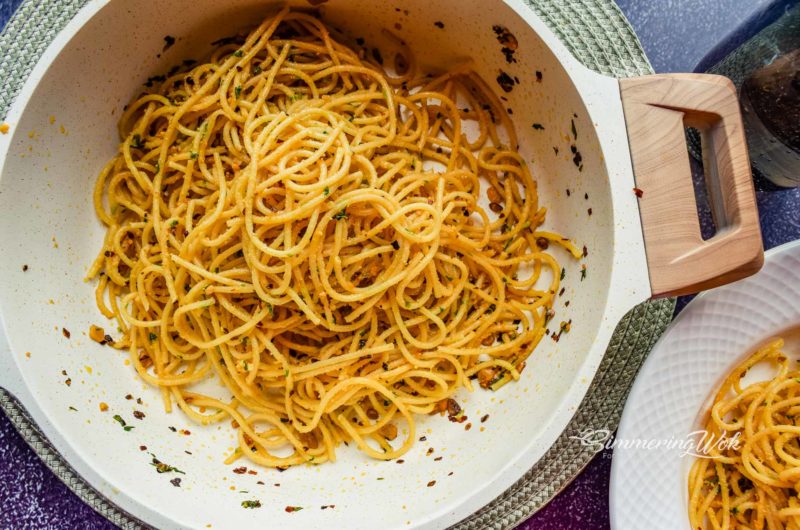
Spaghetti Aglio e Olio Recipe
This recipe for pasta aglio e olio is the best thing to make on a weeknight.
It only takes 15 minutes to make, the ingredients are easy to find, and it tastes great.
2
servings5
minutes10
minutes778
kcalIngredients
250 gms whole wheat spaghetti
2 tbsp olive oil
4-5 garlic cloves (thinly sliced)
2 tsp red pepper flakes
Handful of coriander leaves or parsley
Salt to taste
1/4 cup Parmesan cheese (powdered or grated)
Directions
- Cook the spaghetti.
In a pan, heat some water and salt until they boil.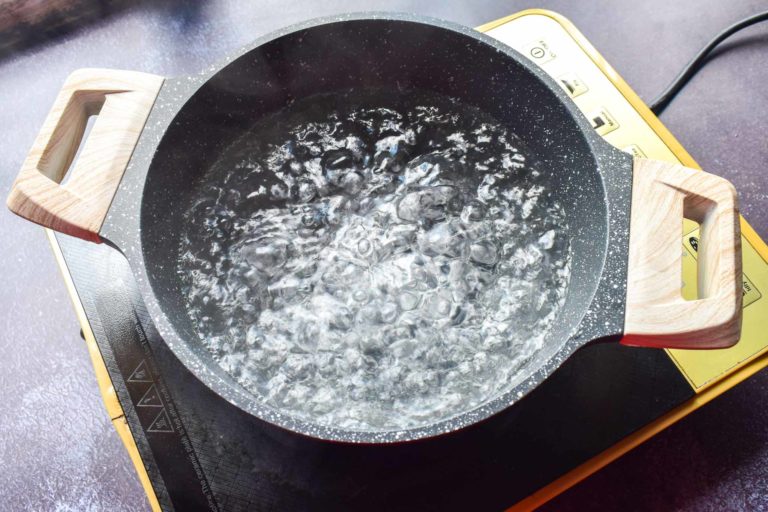
When the water boils, add the spaghetti and cook it according to the package instructions.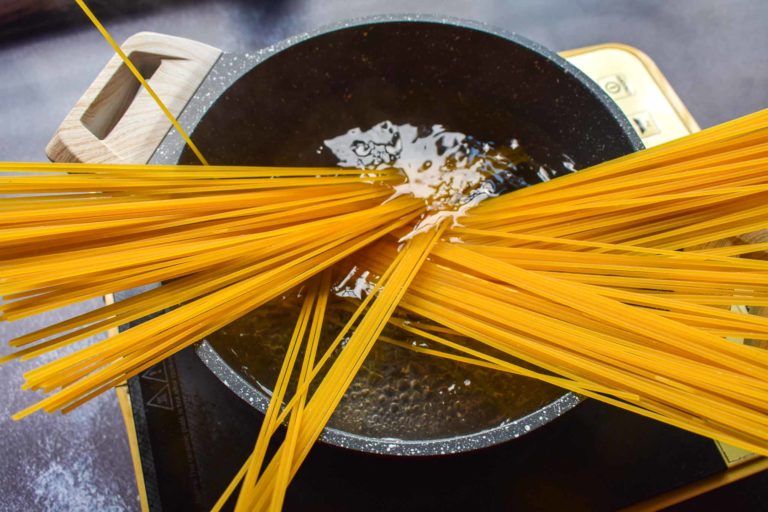
Strain all the water from the cooked spaghetti when it’s done.
Note: Save some of the starchy water from the pasta before you drain it.
- Sauce preparation.
Heat a pan at a medium temperature. Add some extra virgin olive oil and let it heat for a few seconds.
Toss in some thinly sliced garlic. Sauté it until it gets a little crunchy and turns a golden brown color.
Add the red pepper flakes and cook for a few seconds.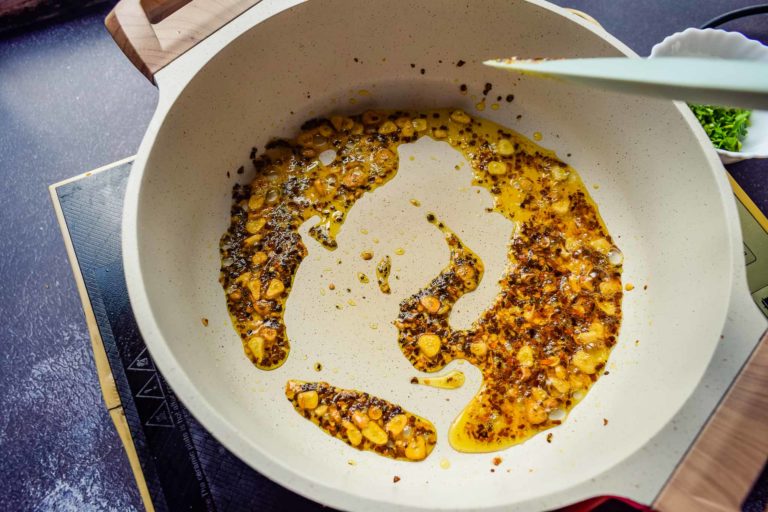
Add the freshly chopped coriander leaves after that. Mix it up quickly.
Now, add some salt according to your taste.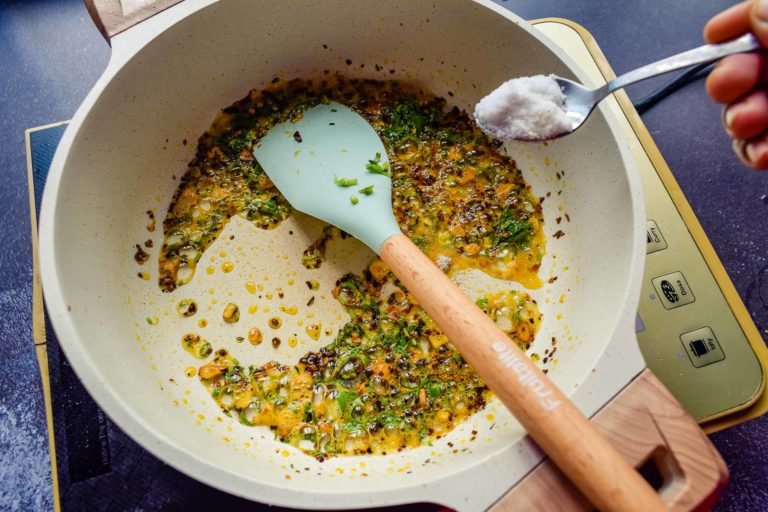
Add some grated Parmesan cheese after the ingredients have been thoroughly combined.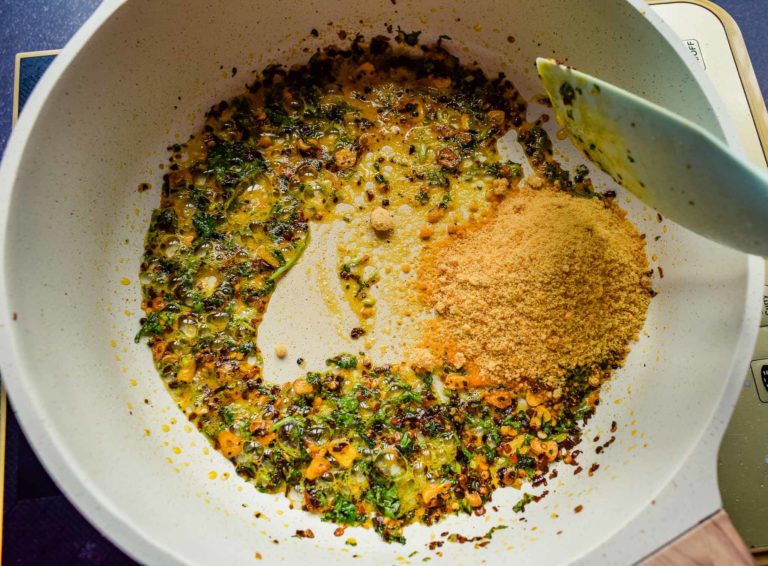
To balance the ingredients, add the pasta stock we saved earlier. Make a homogeneous mixture to avoid lumps in the sauce.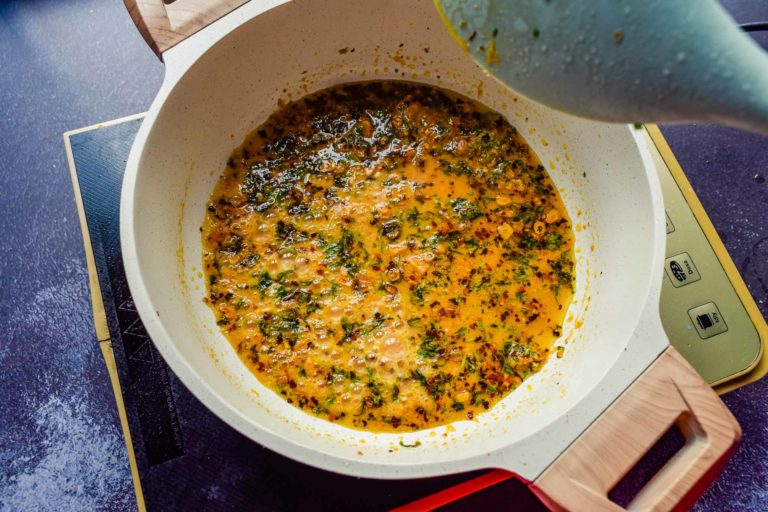
Lastly, add the boiled spaghetti to the sauce. Mix everything nicely.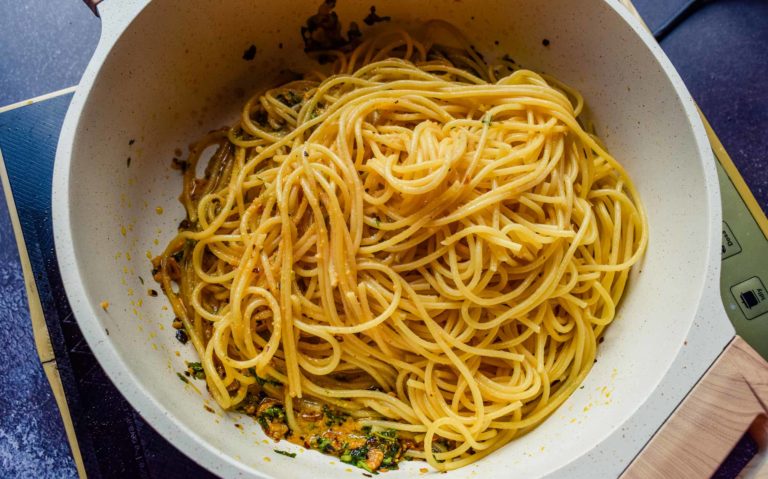
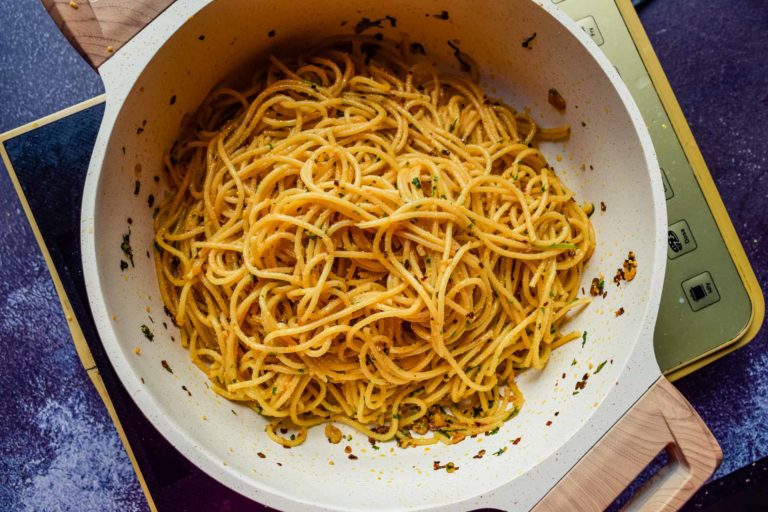
Top with some Parmesan cheese, serve hot, and relish!
AND THAT’S IT!
YOUR EASY AND QUICK SPAGHETTI AGLIO E OLIO IS READY TO EAT!
ENJOY!
Notes
- If pasta is overcooked, it becomes soggy. As a result, stop cooking it before that occurs.
- The dish shouldn’t be prepared over a high flame because it contains garlic and ingredients that cook too quickly.
Nutrition Facts
2 servings per container
- Amount Per ServingCalories778
- % Daily Value *
- Total Fat
36g
47%
- Saturated Fat 8g 40%
- Trans Fat 0.2g
- Cholesterol 22mg 8%
- Sodium 458mg 20%
- Total Carbohydrate
88g
32%
- Dietary Fiber 5.2g 18%
- Total Sugars 1.6g
- Protein 24g 48%
- Calcium 24mg 2%
- Potassium 206mg 5%
- Vitamin A 12mcg 2%
- Vitamin C 10mg 12%
* The % Daily Value tells you how much a nutrient in a serving of food contributes to a daily diet. 2,000 calories a day is used for general nutrition advice.
Tips for the Perfect Aglio e Olio
Don’t Burn The Garlic – This is the most important tip for making a great aglio e olio. You can burn garlic on very high heat in a matter of seconds, and once garlic is burnt it’s bitter and turns what would be a fantastic dish into garbage. Cook the garlic on medium-low heat, allowing it to turn a deep golden color but remaining far from brown.
Save your pasta water before draining. You need that starchy water to create the sauce. Without it, you’ll just have oily pasta. About half a cup is enough.
Do not overcook your pasta, as it will continue to cook in the pan after you’ve added it to the garlic oil. Cook it 1 minute less than the package indicates and serve while it is still slightly firm in the center.
Use good olive oil. With only three ingredients total, it’s especially important to use the best. I personally recommend using an extra virgin olive oil.
Toss the pasta in the pan, not in a bowl. You want the pasta to absorb the garlic oil and mix with the pasta water in the hot pan. This is what creates the light, silky sauce.
Storage & Variations
Leftover aglio e olio will keep in the fridge for up to 2 days in an airtight container. I simply reheat it in a pan with a bit of olive oil and a tablespoon of water on medium heat. It can be reheated in the microwave too, although the pasta may get a bit dry. It still tastes amazing the next day straight from the fridge.
Of course, you can always add some protein like grilled chicken, pan seared shrimp, or crispy bacon. A lot of people add cherry tomatoes, broccoli, or mushrooms too. This is a really simple yet delicious pasta base recipe that you can tweak and modify as you see fit.
Common Questions About Spaghetti Aglio e Olio
Can I use coriander instead of parsley in aglio e olio?
Coriander is a fantastic substitute for parsley. Its slightly earthy flavor with a citrusy note pairs wonderfully with the pungency of the garlic and the richness of the olive oil. Make sure you are using fresh coriander and add it right after the garlic turns golden.
What is the best substitute for parsley in aglio e olio?
Fresh basil or a combination of both basil and coriander make fantastic substitutes as well. Dried parsley is not the best substitute as its flavor gets lost once it is dried. If you have run out of fresh herbs you can omit it altogether as the dish is still fantastic.
Does aglio e olio have parsley?
Yes, traditionally parsley is one of the garnishes used to serve aglio e olio along with garlic, olive oil and spaghetti, but not all recipes include it and some versions skip it entirely.
What is the best cheese for aglio e olio?
Some Italian purists would say that you shouldn’t put any cheese in an aglio e olio. I personally find that a sprinkle of Parmesan (or Pecorino Romano) makes a fantastic addition to this simple yet powerful dish.
Can I use frozen or dried spaghetti?
Frozen or dried spaghetti both work fine. Don’t overcook it – cook it one minute less than indicated on the package instructions and reserve a cup of pasta water before you drain the spaghetti.